
Hidden Canyons and Gorges in India Worth Exploring
India’s dramatic landscapes are often associated with mountains and valleys, yet some of its most striking formations lie deeper within the earth itself. Hidden canyons and gorges in India carve through plateaus, forests, and river systems, revealing layers of rock shaped slowly by water and time. These places reward patience rather than speed, offering immersive experiences where scale, shadow, and silence take centre stage.
Unlike popular viewpoints or tourist-marked valleys, gorges demand slow exploration. You walk along rim trails, descend into narrow passages, or follow rivers that wind between steep rock walls. The light changes constantly, creating dramatic contrasts that appeal to photographers and nature lovers alike. Many of these canyons sit close to offbeat river valleys, forgotten plateaus, and remote village routes, making them perfect additions to SceneLoc8’s offbeat travel narratives.
Why Hidden Canyons in India Feel So Powerful
Canyons compress space in a way few landscapes can. Sound echoes, light narrows, and the sky becomes a distant strip above. This creates a heightened sense of presence that feels grounding and intense at the same time.
For photographers, canyons offer strong vertical compositions, textures, and natural framing. Rock layers tell geological stories, while water adds movement and reflection. For travellers, these spaces encourage awareness, caution, and deeper connection with the landscape rather than casual sightseeing.
Gandikota Gorge Beyond the Main Viewpoint, Andhra Pradesh
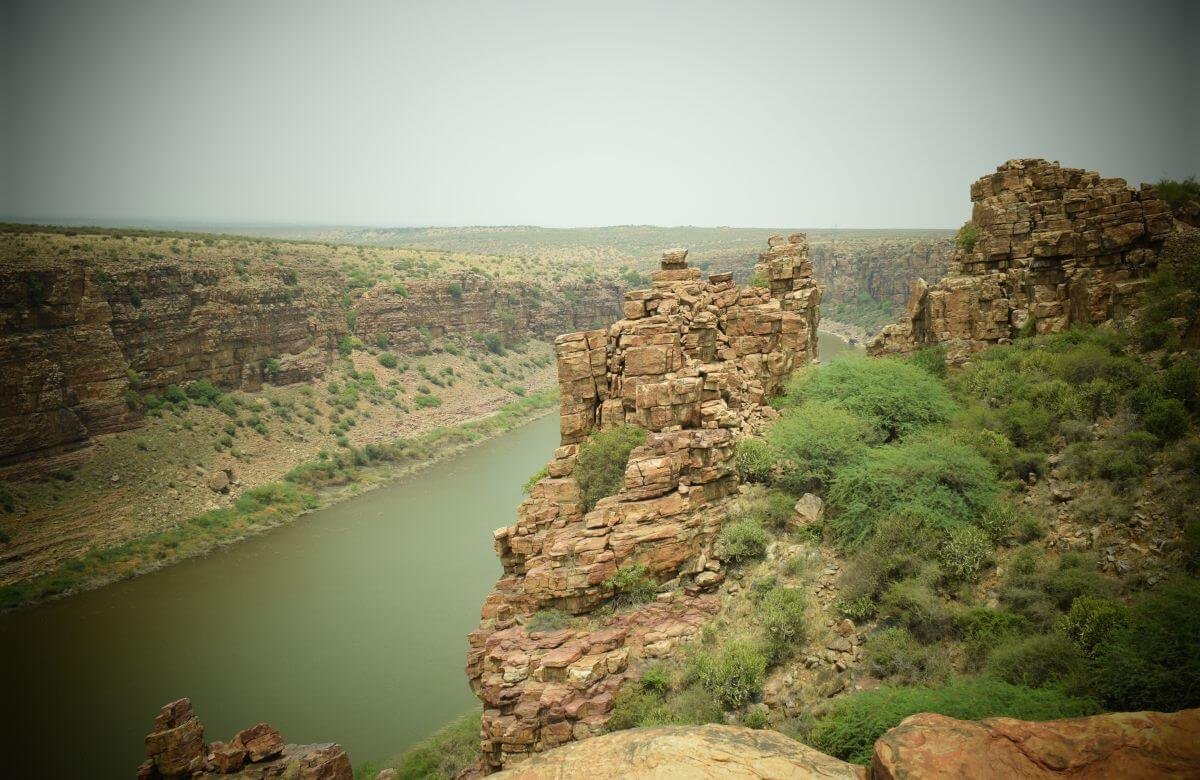
Gandikota is often called the Grand Canyon of India, yet most visitors stop at the main viewpoint and leave. Beyond this spot lie quieter rim trails and lesser-explored sections of the gorge that offer equally dramatic views without crowds.
Walking these edges reveals shifting perspectives of the Pennar River cutting through deep red rock. Sunrise and sunset create powerful colour contrasts across canyon walls. These areas pair beautifully with offbeat plateau landscapes and forgotten hill forts in the region.
Chambal Ravines and Hidden Gorges, Rajasthan–Madhya Pradesh
The Chambal region is famous for its ravines, but few travellers explore the deeper gorges where the river has carved narrow, winding channels. These hidden sections feel raw and untamed, with steep banks, eroded rock, and minimal human presence.
Birdlife, quiet water movement, and rugged terrain define the experience. These gorges align naturally with uncharted wildlife spots and offbeat river islands along the Chambal basin.
Dzukou Valley Side Gorges, Nagaland–Manipur Border
While Dzukou Valley is known for its meadows, smaller side gorges feed into the main valley, carving narrow channels through rock and grassland. These gorges are often missed by trekkers focused on the open plateau.
Exploring them reveals waterfalls, shaded rock corridors, and intimate landscapes that contrast with the wide valley above. These gorges connect seamlessly with hidden mountain trails and offbeat North East landscapes.
Kanger Valley Deep Gorge Sections, Chhattisgarh
Beyond waterfalls and caves, Kanger Valley hides deep forest gorges where rivers cut through dense sal forests. These sections remain quiet due to limited access and dense terrain.
The combination of thick canopy, dark rock walls, and filtered light creates a moody, immersive environment. These gorges pair well with forgotten forest trails and hidden cave systems in central India.
Sandhan Valley Narrow Passages, Maharashtra
Sandhan Valley is known among trekkers, but its quieter entry sections and deeper narrow corridors remain less explored. The gorge tightens dramatically in places, creating slot-canyon-like passages shaped by centuries of water flow.
During dry months, light filtering through narrow openings creates striking visual patterns. These canyon sections complement forgotten railway trails and offbeat trekking routes in the Western Ghats.
Zanskar Side Gorges, Ladakh
While Zanskar’s main valley is dramatic, its side gorges offer even greater isolation. Narrow canyons cut through rock, often accessible only by foot during summer months.
The stark colour palette, silence, and immense scale create a powerful sense of remoteness. These gorges align closely with hidden high altitude lakes and remote desert landscapes beyond the Thar in their raw simplicity.
Sharavathi River Gorges, Karnataka
Beyond the famous waterfalls, the Sharavathi River carves deep gorges through forested terrain. These sections remain largely unexplored due to dense vegetation and limited trails.
The sound of water echoing through rock corridors adds to the immersive experience. These gorges connect naturally with untouched forest trails and secret jungle retreats in the Western Ghats.
Raneh Falls Canyon Zones, Madhya Pradesh
Raneh Falls reveals a dramatic volcanic rock canyon carved by the Ken River. While viewpoints attract visitors during monsoon, off-season exploration of surrounding canyon zones offers quieter, equally striking perspectives.
Layered basalt formations, sculpted by water, create strong geometric patterns ideal for photography. These canyon areas align well with forgotten water architecture and offbeat heritage landscapes nearby.
Best Time to Explore Hidden Canyons in India
Post-monsoon and winter offer safer access and dynamic lighting. Monsoon enhances water flow and drama but can make canyon exploration risky due to flash floods and slippery surfaces.
Early mornings provide softer light and calmer conditions, ideal for photography and careful exploration.
Responsible Travel in Canyon Landscapes
Canyons are sensitive and potentially dangerous environments. Avoid exploring during heavy rain, respect natural boundaries, and never enter narrow gorges without local knowledge.
Do not disturb rock formations, vegetation, or wildlife. Carry all waste back and follow low-impact travel practices to preserve these fragile landscapes.
Also read : Forgotten Plateaus and Tablelands in India
Conclusion
Hidden canyons in India reveal the country’s dramatic geological depth, carved patiently by water and time. Their quiet power, layered rock, and immersive atmosphere invite travellers to slow down and look inward as much as outward. For those seeking offbeat landscapes rich in texture, scale, and silence, India’s canyons offer journeys that feel raw, humbling, and unforgettable.